




Little or no urine
Repeated litter box trips with only drops, or no urine at all, can mean the bladder is blocked.
If your cat keeps going to the litter box but little or no urine comes out, especially in a male cat, treat it as urgent. HKSEV explains the warning signs, what to do before travelling to the clinic, and when to call 24-hour emergency support.
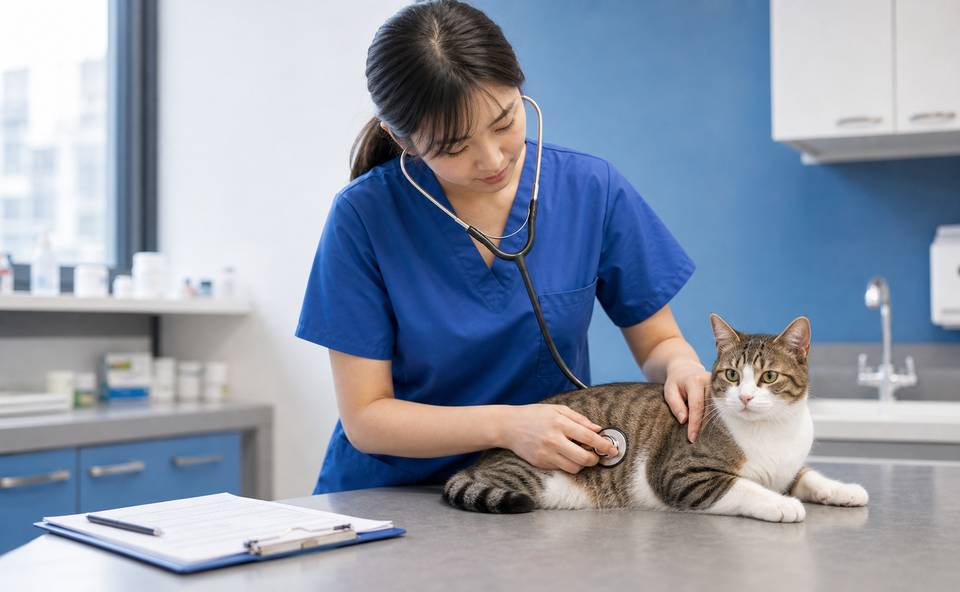
Cat urinary blockage means urine cannot pass normally from the bladder through the urethra. Owners may notice repeated litter box trips, straining, crying, blood in urine, or only a few drops coming out. If no urine is being passed, the cat can deteriorate quickly.
Male cats are higher risk because the urethra is narrower. Plugs of mucus, crystals, small stones, inflammation or swelling may block the passage. Stress, indoor lifestyle, diet, previous urinary disease and multi-cat homes can also be part of the picture.
Repeated litter box trips with only drops, or no urine at all, can mean the bladder is blocked.
Male cats have a narrower urethra, but any cat with blood, pain or difficulty urinating should be checked promptly.
No urine, vomiting, collapse or a painful swollen belly should be treated as an emergency.
A blocked cat may look like constipation at first. The key difference is repeated litter box attempts with little or no urine, often with pain or distress. If you are unsure whether it is urine or stool, treat it as urgent until a vet confirms otherwise.
Do not wait overnight to see if it improves. A complete obstruction can become life-threatening because the bladder stays full and toxins/electrolyte problems can build up. Home remedies, forcing water or leftover antibiotics cannot unblock a cat safely.
Tell the clinic: male/female, age, last known urine, vomiting, appetite and energy level.
If the cat is nauseous, weak or breathing oddly, forcing water may make things worse.
Take litter photos, urine clumps, videos of straining and any past blood/urine reports.
No urine, vomiting, collapse or painful swollen belly should be treated as emergency.
The first job is to decide whether the cat is blocked, partially obstructed, or has bladder inflammation without obstruction. A vet may palpate the bladder, check pain level, run blood tests for kidney/electrolyte impact, assess urine and use X-ray or ultrasound if stones or other causes are suspected.
If a urinary catheter is needed, sedation or anaesthesia may be required. After unblocking, some cats need hospital monitoring until they can urinate safely. Recurrent cases may be assessed for longer-term prevention or, in selected cases, PU surgery.
| Step | Why it matters | What owners may notice |
|---|---|---|
| Physical exam | Check bladder size, pain, dehydration and emergency stability. | Repeated litter box trips, crying or a hard painful belly. |
| Blood / urine tests | Assess kidney values, electrolytes, infection, crystals and inflammation. | Vomiting, weakness, poor appetite or blood in urine. |
| X-ray / ultrasound | Look for stones, bladder changes or other urinary tract issues. | Recurrent urinary signs or suspected stones. |
| Catheter / hospital care | Relieve obstruction and monitor urination after swelling improves. | Little or no urine despite repeated attempts. |
The safest choice depends on whether your cat is still passing urine and how unwell they look. If your cat is bright and passing urine, a day consultation may be suitable. If little or no urine is coming out, or your cat is vomiting, weak, collapsed or painful, call emergency support first.
The figures below help owners understand the starting point before booking. Tests, imaging, medication, procedures and hospital care depend on the cat's condition, age, history and examination findings.
For stable cats that are still passing urine but have blood, frequent litter box trips or urinary discomfort.
Blood tests, urine tests, X-ray or ultrasound may be recommended depending on the cat's condition.
If your cat can't pee, is vomiting, weak or collapsed, call HKSEV 24-hour emergency at 2833 6177.
A detailed HKSEV urinary emergency guide for local cat owners.
For recurrent blockage or cases where a wider urinary opening may be discussed.
Blood in urine may involve cystitis, stones, infection or other urinary disease.
Helps separate frequent urination from a true inability to pass urine.
Imaging may help assess urinary stones, abdomen or other suspected causes.
No urine, vomiting or collapse should go straight to emergency support.
You can WhatsApp your pet's age, symptoms, duration, appetite, energy level and any photos or videos. If your cat has breathing difficulty, collapse, seizures, cannot pass urine, persistent vomiting or heavy bleeding, call 24-hour emergency at 2833 6177.
G/F, 44 Nullah Road, Mong Kok, near Prince Edward Station. Suitable for day consultation, follow-up and initial assessment.
Call 2668 6618G/F, 177-179 Tung Choi Street, Mong Kok. Supports 24-hour cat and dog emergency care and night cases.
24-hour 2833 6177G/F, 375 Nathan Road, Yau Ma Tei. Convenient for Yau Ma Tei and Jordan pet owners.
Call 2393 3381Yes. If a cat, especially a male cat, is straining but producing little or no urine, this can be life-threatening and should be treated as an emergency.
Call a vet immediately. Take videos and litter box photos if safe, but do not wait overnight or try home remedies if no urine is being passed.
Female cats can have serious urinary problems too, although complete obstruction is more common in male cats. Any cat with pain, blood, frequent attempts or no urine should be assessed.
PU surgery can reduce the chance of urethral re-obstruction in selected recurrent cases, but it does not cure bladder inflammation or stop stones/crystals from forming by itself.
For suspected cat urinary blockage, do not wait for the cat to become weak. HKSEV can triage urinary cases through day consultation or 24-hour emergency depending on severity.


